
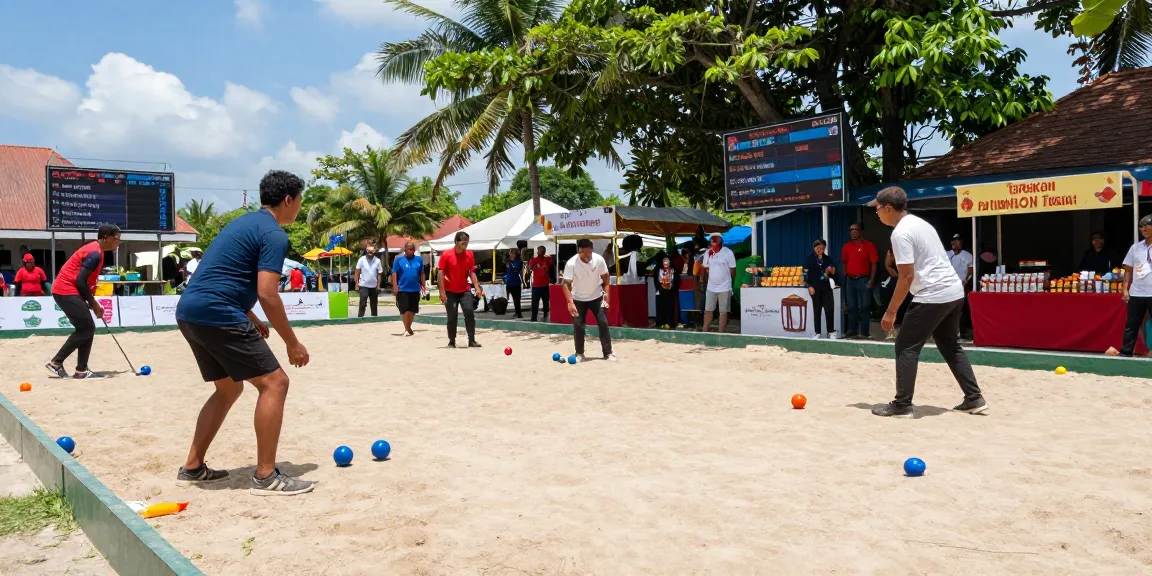
The Origins and Evolution of Petanque in Indonesia
Petanque, a game that combines strategy, skill, and social interaction, has a rich history that is often overlooked in Indonesia. This sport, akin to boules, invites players to throw metal balls as close as possible to a small wooden ball called the cochonnet. Despite its global appeal, the origins of petanque in Indonesia remain somewhat nebulous. Researchers are still piecing together the timelines and key figures who introduced this engaging game. However, what is certain is that petanque has become a beloved pastime in various regions across the country, fueled by a mix of cultural adoption and community involvement. To delve deeper into the developments surrounding this sport, interested individuals can visit fopikotatarakan.org, the official site for the Federasi Olahraga Petanque Indonesia in Tarakan.
Historical Introduction to Petanque in Indonesia
The arrival of petanque in Indonesia dates back several decades, primarily brought by French expatriates. These individuals established early petanque courts at several hotels, such as the Novotel in Bali, designed to cater to clientele seeking leisure activities. As these expatriates formed small communities, they introduced petanque not only as a recreational activity but also as a means to foster connections among diverse cultures. It was not until the 1990s that the sport began to gain traction among locals, thanks in part to the efforts of people like Eddie Lim, who learned the sport in Jakarta and subsequently shared it with others in his home country of Singapore.
Impact of French Culture on Petanque Adoption
The introduction of petanque in Indonesia can largely be attributed to the influence of French culture. As French nationals began to establish their presence in major cities like Jakarta, Yogyakarta, and Bali, they brought with them the cultural traditions that included petanque. This sport provided a recreational outlet that resonated with the local populace, leading to its gradual incorporation into the Indonesian sporting landscape. The laid-back nature of petanque appealed to various demographic groups, making it accessible to a wider audience.
Key Milestones in Petanque’s Popularity
A significant turning point for petanque in Indonesia occurred during the 2011 SEA Games held in Jakarta and Palembang. This event marked the first time petanque was included as a mandatory sport, signaling a turning point for its recognition on a national level. Following this, the establishment of the Federasi Olahraga Petanque Indonesia (FOPI) on March 11, 2011, further solidified petanque's presence. FOPI has been instrumental in organizing events, training athletes, and enhancing the profile of petanque across the country.
FOPI Kota Tarakan: The Driving Force Behind Petanque
FOPI Kota Tarakan plays a critical role in the development and promotion of petanque at the local level. Functioning under the auspices of the FOPI Provinsi Kalimantan Utara, this organization is dedicated to fostering the sport throughout Tarakan. As a recognized affiliate of KONI Kota Tarakan, FOPI acts as the primary body coordinating various activities, events, and training programs aimed at elevating the sport and nurturing talent.
Organizational Structure and Goals of FOPI
The organizational structure of FOPI Kota Tarakan encompasses a board of dedicated individuals focused on various aspects of governance, outreach, and athlete development. Their primary goals include increasing participation at all levels, providing training resources, and establishing competitions to showcase local talent. By creating a structured environment for athletes and enthusiasts, FOPI aims to raise the standards of play and enhance the reputation of petanque in the region.
Collaboration with National and Local Sports Entities
Collaboration is vital for the growth of any sport, and FOPI Kota Tarakan understands this well. The federation has established partnerships with national organizations and local sports bodies to facilitate the exchange of knowledge, best practices, and resources. This collaboration aims to bring comprehensive training solutions and competitive opportunities to local athletes, ensuring they receive the best preparation possible for both local and national competitions.
Community Engagement and Development Programs
Engaging the community is at the heart of FOPI's initiatives. The organization regularly conducts outreach programs that include workshops, exhibitions, and youth camps to introduce petanque to new audiences. These programs aim to build enthusiasm for the sport among younger generations, ensuring a sustained interest in petanque and the development of future athletes. By fostering community engagement, FOPI seeks to create a sustainable environment where petanque can flourish.
Understanding Petanque: Rules and Techniques
For those new to petanque, understanding the basic rules and techniques is essential for enjoying the game and participating in local events. Petanque is traditionally played on a gravel or dirt surface, but it can also adapt to various settings, making it a versatile sport that can be played in different environments. Learning the fundamentals is the first step toward becoming a proficient player.
Basic Rules Every Player Should Know
- Each player or team takes turns throwing metal balls, with the objective of getting as close as possible to the cochonnet.
- A typical game consists of multiple rounds, and the first player or team to reach 13 points wins.
- Players must stand inside a circle when throwing their balls and cannot step outside until the ball has been released.
Essential Techniques for New Players
New players will benefit from practicing essential techniques that can improve their game. Key techniques include:
- Pointing: The act of throwing the ball directly toward the cochonnet.
- Shooting: A more aggressive technique used to knock opponents' balls away from the cochonnet.
- Measuring: Understanding how to properly measure distances to determine who is closest to the cochonnet.
Common Mistakes and How to Avoid Them
Like any sport, beginners in petanque can fall prey to common mistakes. Here are a few to watch out for:
- Incorrect stance or positioning when throwing the ball, which can lead to poor accuracy.
- Overlooking the importance of strategy; simply throwing the ball does not guarantee success.
- Neglecting to communicate with teammates, especially during doubles or team play.
Participating in Local Petanque Tournaments
Local tournaments provide an excellent opportunity for players to showcase their skills and gain competitive experience. For anyone looking to participate, understanding how to register and prepare for these events is crucial.
How to Register for Events Through fopikotatarakan.org
Intrigued individuals can easily register for upcoming tournaments by visiting fopikotatarakan.org, where they can find details about schedules, registration forms, and guidelines for participation. It is essential to read through the requirements carefully to ensure a smooth registration process.
Preparing for Competitions: Tips and Strategies
Preparation can significantly impact performance during competitions. Here are some tips to help players get ready:
- Practice regularly to hone skills and develop consistency in throws.
- Study past tournament results to identify trends and understand what techniques have been successful.
- Establish a pre-tournament routine that includes mental and physical warm-ups.
Success Stories from Local Athletes
In recent years, many local athletes have emerged on the national stage, showcasing the talent nurtured within the community. These success stories serve as inspiration for new players, demonstrating that dedication and practice can lead to achievement. Recognizing and celebrating these athletes not only adds excitement to the sport but also motivates others to pursue their own goals in petanque.
The Future of Petanque in Indonesia: Trends and Predictions
As we look forward to the future of petanque in Indonesia, several trends and predictions emerge that could shape the sport's growth and development.
Emerging Talents and the Role of FOPI
With FOPI continuing to develop training programs and competitions, the identification and nurturing of emerging talent will become increasingly important. Young players will have more opportunities to participate in training camps and workshops, which will strengthen the foundation of this sport for years to come.
Potential for Growth in Community Engagement
Community engagement will play a significant role in the future of petanque. As more people become aware of petanque through outreach programs and competitions, the sport could see a surge in popularity. FOPI's efforts to involve schools and local organizations will be crucial in maintaining interest and fostering new players.
Upcoming Events and Initiatives for 2026
Looking ahead to 2026, FOPI is planning several exciting initiatives that could enhance the visibility of petanque both locally and nationally. These initiatives may include larger tournaments, youth development camps, and community outreach programs. By focusing on inclusive participation and building a strong community around petanque, FOPI aims to solidify the sport's place in Indonesia.
What is the role of FOPI Kota Tarakan in promoting petanque?
FOPI Kota Tarakan serves as the primary governing body responsible for the promotion and development of petanque in the region. They provide resources, organize events, and facilitate connections between players and coaches.
How can I get involved with petanque in Tarakan?
Individuals interested in getting involved can do so by visiting local petanque courts, joining community groups, or participating in training programs offered by FOPI Kota Tarakan.
What are the health benefits of playing petanque?
Playing petanque offers numerous health benefits, including improved hand-eye coordination, enhanced social interaction, and increased physical activity, which contributes to overall fitness.
Are there youth programs for learning petanque?
Yes, FOPI Kota Tarakan actively promotes youth programs aimed at teaching petanque. These programs are designed to engage younger players and foster their interest in the sport.
How does petanque compare to other sports in Indonesia?
Petanque differs from many traditional sports in Indonesia due to its accessibility and ease of play. It encourages social interaction and community building, making it an attractive option for individuals of all ages.